
General
How to Improve EBITDA in a Middle-Market CompanyReady
Proven framework to improve EBITDA 100-300% in PE-backed middle-market companies through operations, sales, and finance optimization.
Areas Impacted:
EBITDACash FlowMargin
Finance
Why traditional budgets fail and what works instead. A smarter approach to cost management that prevents overhead bloat as you scale.
Controlling costs is paramount for maintaining efficiency and preventing overhead bloat as your business scales. During growth, you accumulate people, resources, and expenses. While budgets are a common tool used to manage costs, they often come with their own set of challenges.
Budgets, while well-intentioned, can sometimes do more harm than good. Here’s why:
To avoid these pitfalls and maintain responsible spending, consider implementing a cash flow modeling system. Here’s a quick and effective method:
Create a 12-Month Cash Flow Model: Break it down into quarters for better granularity.
Monthly Columns: For each month, have three columns:
Build Based on Assumptions: Use current run rates, planned investments, and working capital assumptions to construct the model.
Monthly Reconciliation: At the end of each month, add the actual expenses next to the calculated estimates.
Review Variances: Conduct meetings with each department or company division where variances are significant, whether above or below the estimate.
Adjust and Plan: Based on these discussions, make necessary adjustments to the model moving forward.
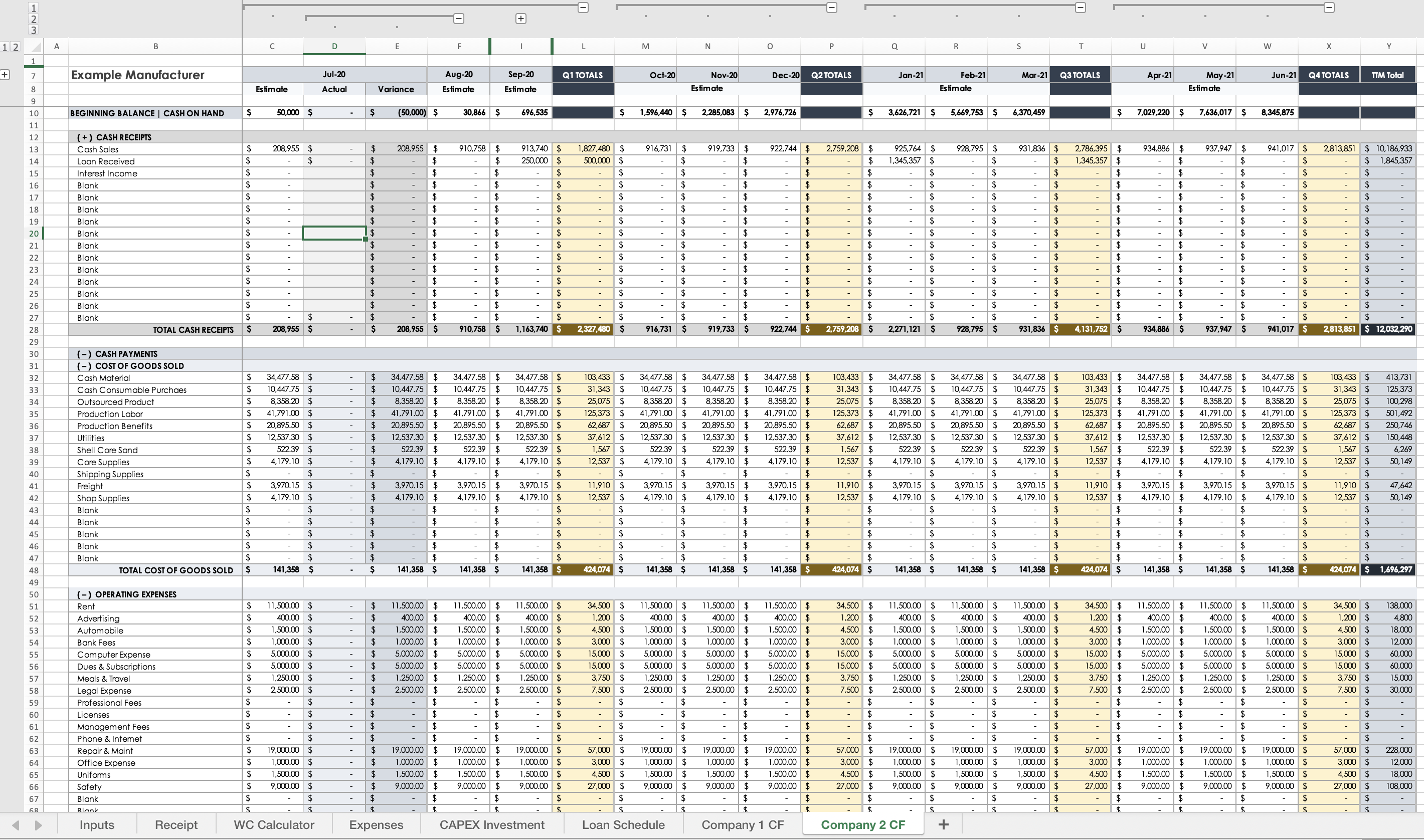
By following this method, you establish a benchmark that you continually compare your company’s performance to. This approach also allows for planned initiatives and discussions, including:
Embrace this method as a means to consistently assess your company’s spend, ensure costs are in check, and maintain financial agility as you navigate the path of growth.
Remember, it’s not just about adhering to a budget; it’s about smart and strategic financial management that leads to sustainable growth.
Continue reading: Dive deeper with How to Improve EBITDA, Eliminating Waste, Maximizing Revenue, and Spend Analysis Basics.
Proven framework to improve EBITDA 100-300% in PE-backed middle-market companies through operations, sales, and finance optimization.
Every percentage point of waste eliminated adds 0.5-1.5% to margins. Learn where waste hides and how to eliminate it systematically.
Most businesses can't answer 'where does our money go?' precisely. Monthly spend analysis by category and vendor reveals hidden savings.