
General
Resource Allocation Strategies for GrowthReady
When should you hire, buy equipment, or invest in tools? A smarter resource allocation strategy than just throwing money at growth.
Areas Impacted:
capacitycash-flow
Operations
Optimize your business capacity without adding headcount. Learn how to identify bottlenecks, measure throughput, and scale operations profitably.
Understanding capacity is essential in scaling a small business.
Understanding your business’s capacity is more than just a numbers game; it’s a vital step in scaling your small business effectively.
Capacity, in simple terms, is what your business can achieve with its current resources.
Knowing this can help you identify:
This knowledge isn’t just useful for your business. It can be applied to assess other companies too, allowing you to combine your efficient playbook with their underutilized resources.
 So, how do you measure and maximize your business’s capacity?
Let’s dive in:
Think of resources that limit the amount of business you can handle.
These could be anything from your workforce to machinery. Ask yourself, “What areas, if expanded, could help us handle more business?” This process is about identifying and increasing your capacity.
👉️ Action Steps:
Group your resources into short, medium, and long-term categories based on how quickly you can adapt or change them.
For instance, staffing can be adjusted more rapidly than purchasing new equipment.
👉️ Action Steps:
Choose the most crucial resource from each time frame category. These will serve as your benchmarks for measuring capacity and business growth.
👉️ Action Steps:
Instead of just looking at sales figures, focus on what I call the ‘production unit’ - the core unit your business produces or sells. This approach helps you measure resource utilization regardless of price changes or sales growth.
👉️ Action Steps:
Now, establish metrics for each time frame. These will be your targets for production units per resource.
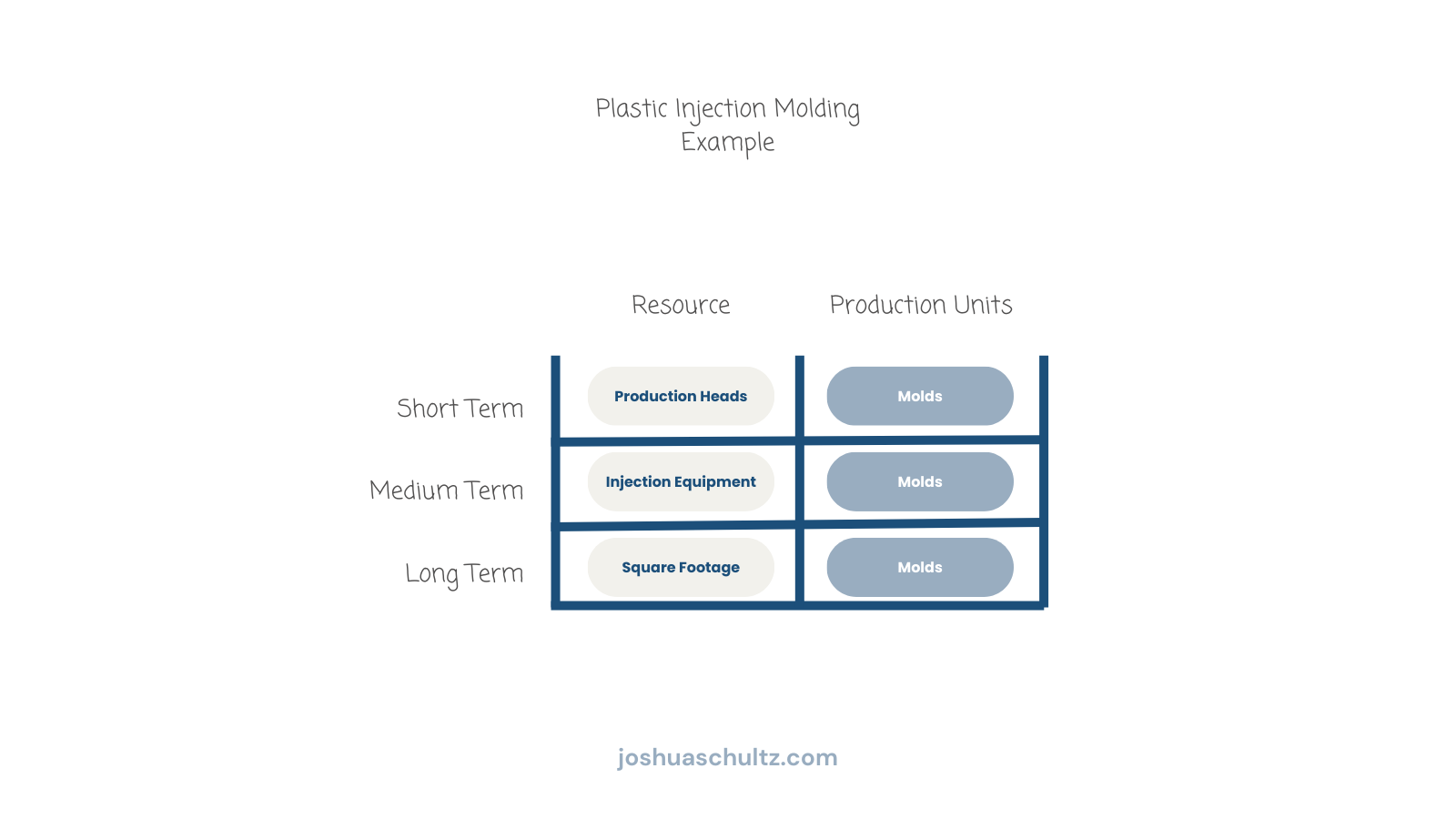 👉️ Action Steps:
Analyze your best and most challenging periods. Look for the upper limits of your metrics before quality or performance drops. Gather similar data from industry peers to set realistic targets.
👉️ Action Steps:
Use the data collected to establish clear targets. This will guide you in measuring monthly performance and resource utilization.
👉️ Action Steps:
By focusing on these strategies, you can:
“Efficiency is doing things right; effectiveness is doing the right things.”
Peter Drucker
Implementing these strategies provides a structured, practical approach to growing your small business. By understanding and managing your capacity effectively, you’re setting your business on a path to sustainable and efficient growth.
 Remember, in the long run, the most successful companies are those that consistently achieve a high return on every resource. Treat your resources as investments, and strive to increase production units per resource. This strategy will not only make your company more efficient but also significantly more valuable over time.
Keep these points in mind, and you’ll be well on your way to scaling your small business!
Continue reading: Dive deeper with Resource Allocation Strategies, Increase Sales Without Spending, and Understanding The Productive Unit.
When should you hire, buy equipment, or invest in tools? A smarter resource allocation strategy than just throwing money at growth.
Boost capacity and sales without new equipment or hires. Learn how to maximize existing resources before spending a dime on growth.
The productive unit is the real driver of revenue—not sales. Learn how to identify, measure, and optimize your productive units to scale profitably.